Milling Machine Manufacturer – Precision Milling Solutions for Industry
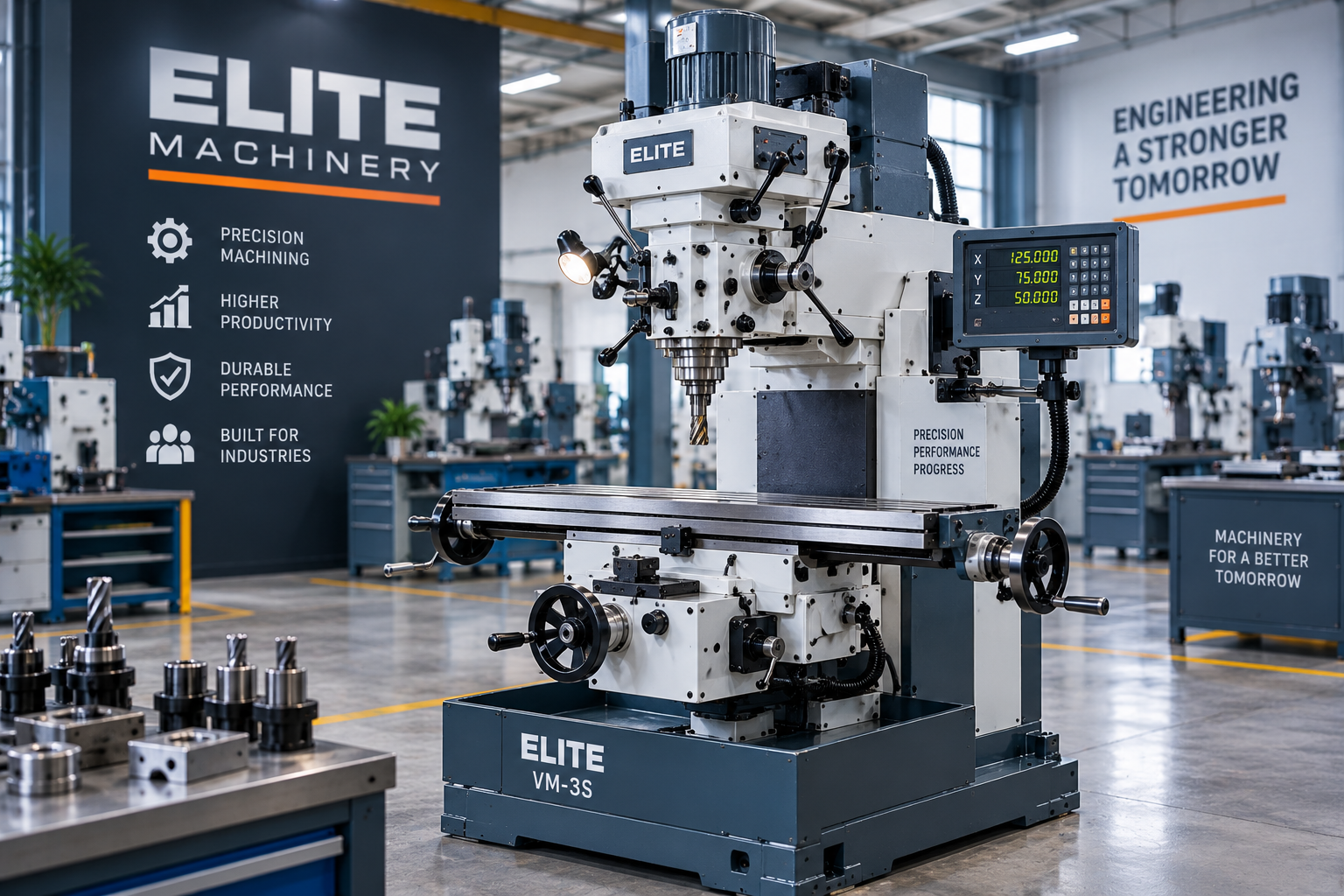
A milling machine is an essential machine tool used in modern manufacturing and engineering industries for cutting, shaping, drilling, and machining different types of materials. With the growing demand for precision components and efficient production, choosing a reliable milling machine manufacturer is important for businesses that want consistent performance and long-term value.
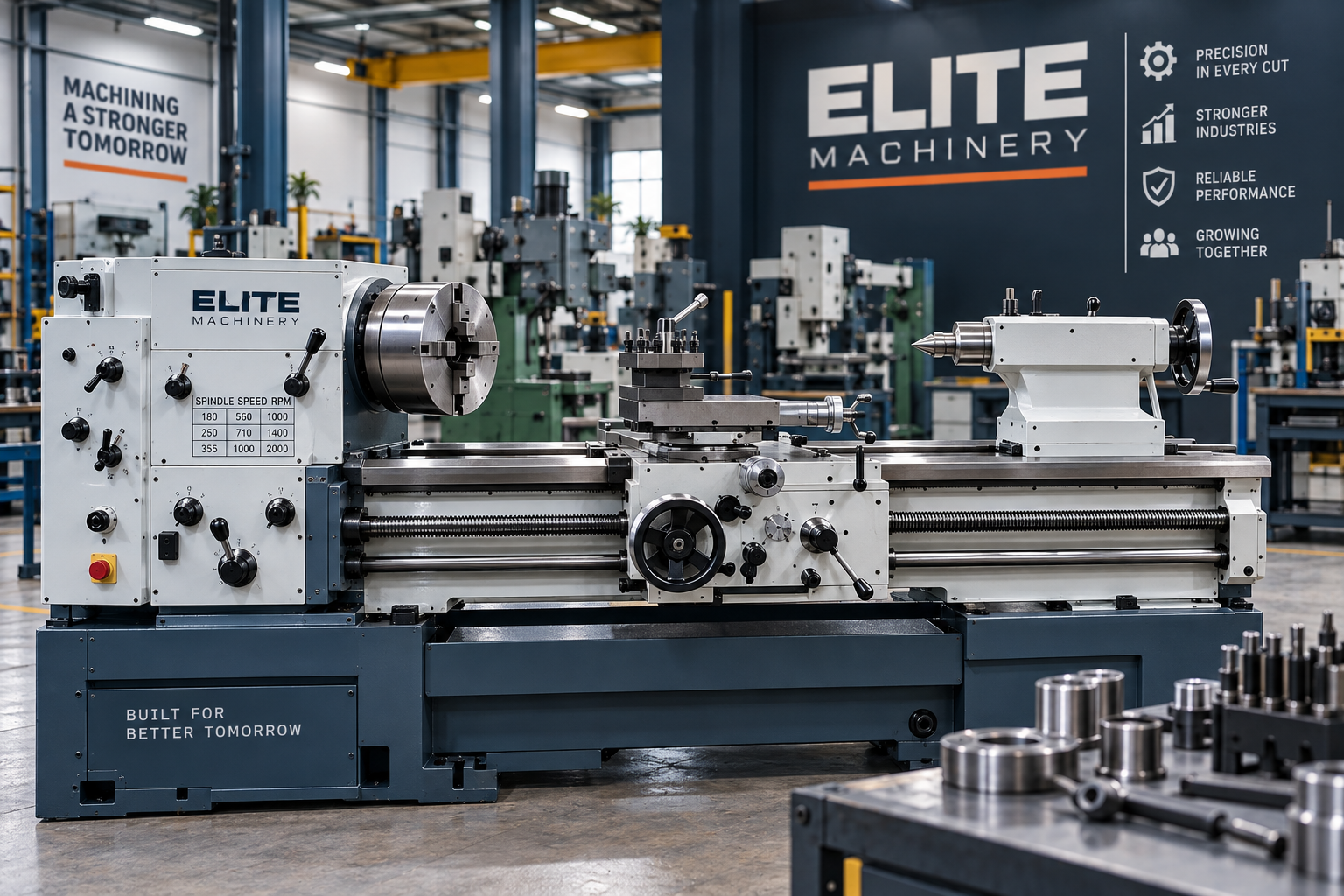
Elite Machinery provides industrial milling machine solutions for engineering workshops, manufacturing units, fabrication businesses, automotive industries, and other industrial applications. Our focus is on delivering reliable machinery designed around precision, productivity, durability, and practical industrial requirements.
Trusted Milling Machine Manufacturer
The performance of a milling machine directly affects machining quality and production efficiency. A properly designed and robust machine can provide accurate cutting, stable operation, and consistent results across different applications.
As a professional milling machine manufacturer, Elite Machinery aims to provide dependable machine tools suitable for a variety of machining requirements. Our machinery solutions are designed to support both general-purpose and demanding industrial operations.
Milling machines can be used for:
- Face milling
- End milling
- Slot cutting
- Drilling
- Keyway cutting
- Gear machining
- Contouring
- Surface machining
- Precision component manufacturing
What Is a Milling Machine?
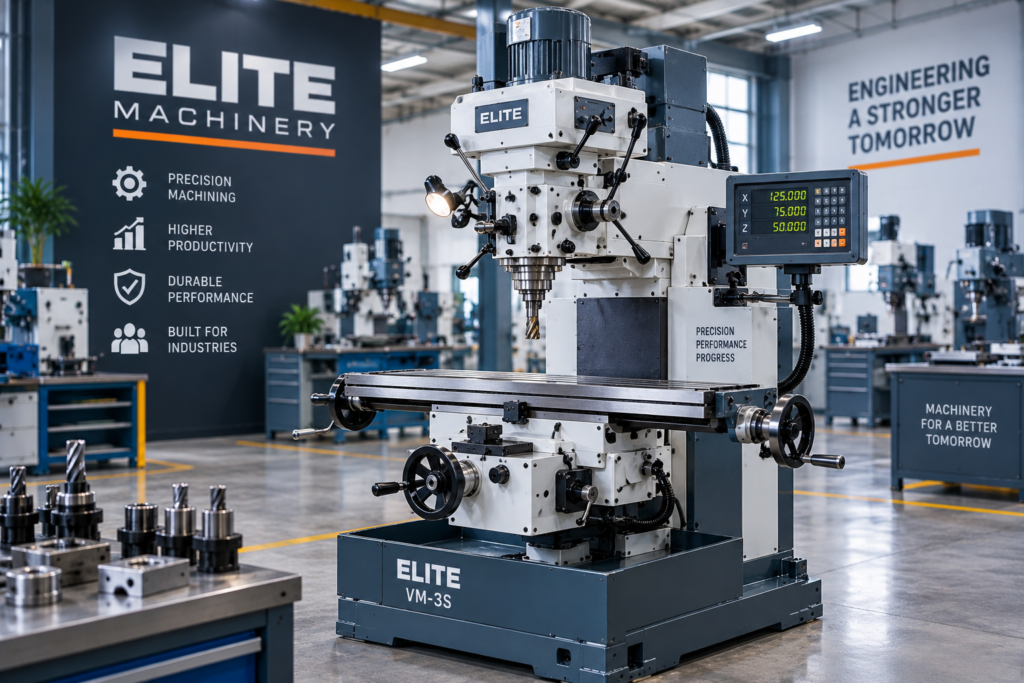
A milling machine is a machine tool that uses a rotating cutting tool to remove material from a workpiece. Depending on the machine configuration, the workpiece or cutting tool can move along different axes to achieve the required shape and dimensions.
Milling machines are widely used because they can perform a variety of machining operations with a high degree of control and accuracy.
They can be used for machining materials such as:
- Mild steel
- Stainless steel
- Aluminium
- Brass
- Cast iron
- Engineering alloys
- Other machinable materials
The appropriate cutting tools, speeds, feeds, and machine configuration depend on the material and application.
Types of Milling Machines
Different industries have different machining requirements. Milling machines are therefore available in various configurations.
Vertical Milling Machine
A vertical milling machine has a vertically oriented spindle and is commonly used for face milling, drilling, slotting, and general machining operations.
Horizontal Milling Machine
Horizontal milling machines have a horizontally positioned spindle and are suitable for heavy-duty machining, slot cutting, and applications requiring strong cutting performance.
Universal Milling Machine
Universal milling machines offer greater flexibility and can be used for a wide range of machining operations. They are commonly used in engineering and production workshops.
Heavy Duty Milling Machine
Heavy-duty milling machines are designed for larger workpieces and demanding machining applications. Robust construction helps provide stability during heavy cutting operations.
Features of a Quality Milling Machine
When selecting a milling machine, businesses should consider machine construction, accuracy, operating flexibility, and overall performance.
Important features can include:
- Rigid machine construction
- Precision-machined table
- Strong spindle assembly
- Smooth table movement
- Reliable drive mechanism
- Adjustable spindle speeds
- Durable components
- Easy-to-use controls
- Efficient chip removal
- Suitable workpiece capacity
The specifications should always be selected according to the intended application and production requirements.
Applications of Milling Machines
Milling machines are used across a wide range of industries.
Engineering Workshops
Engineering workshops use milling machines to manufacture and modify components, fixtures, tools, and machine parts.
Automotive Industry
Milling machines can be used for machining automotive components, brackets, housings, shafts, fixtures, and other precision parts.
Manufacturing Industry
Manufacturing facilities use milling machines for producing components with specific dimensions, slots, profiles, and surfaces.
Fabrication Industry
Milling equipment can support fabrication operations where accurate machining is required after forming, welding, or fabrication processes.
Tool and Die Manufacturing
Milling machines are widely used for producing dies, mould components, fixtures, jigs, and other tooling applications.
Maintenance and Repair
Industrial maintenance departments can use milling machines to repair, modify, or manufacture replacement components.
Benefits of Using a Milling Machine
Investing in the right milling machine can provide several benefits for manufacturing and engineering businesses.
Precision Machining
A properly configured milling machine can help produce components with accurate dimensions and consistent machining results.
Increased Productivity
Efficient milling operations can reduce machining time and help businesses increase production output.
Versatile Machining
A milling machine can perform several operations using different cutting tools, making it a versatile addition to an industrial workshop.
Better Surface Finish
Appropriate machine settings and cutting tools can help achieve the required surface finish on machined components.
Long-Term Value
A robust machine with suitable specifications can provide dependable performance over many years when operated and maintained correctly.
How to Choose a Milling Machine Manufacturer?
Selecting the right manufacturer is just as important as selecting the machine itself. Before purchasing, consider:
- Machine Capacity: Check table size, working area, spindle capacity, and maximum workpiece dimensions.
- Spindle Specifications: Consider spindle speed, power, and tooling requirements.
- Machine Rigidity: A rigid structure helps improve stability during machining.
- Accuracy: Evaluate the precision required for your components.
- Production Volume: Select machinery according to your production requirements.
- Ease of Operation: Controls and machine operation should be practical for the intended users.
- Service Support: Availability of technical assistance, spare parts, and maintenance support is important.
- Total Cost: Consider purchase price, operating costs, maintenance, and expected machine life.
Milling Machine Manufacturer in India
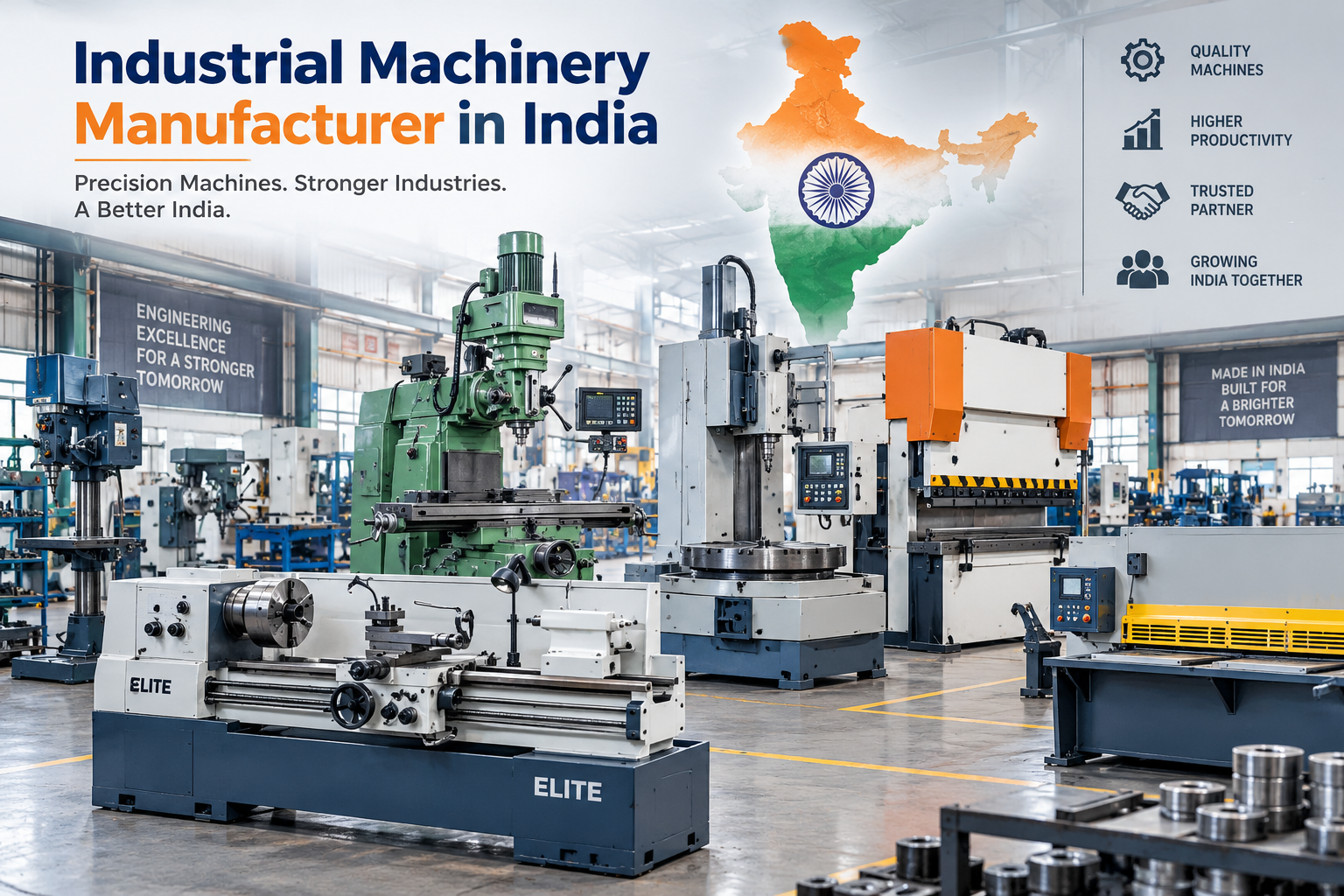
India has a growing engineering and manufacturing sector with increasing demand for precision machine tools. A reliable milling machine manufacturer in India can provide businesses with suitable equipment for various machining applications.
Local sourcing can also provide advantages such as easier communication, technical support, spare parts availability, installation assistance, and reduced logistics challenges.
Elite Machinery provides industrial machinery solutions for customers looking for reliable milling and other machine tools for engineering and manufacturing operations.
Why Choose Elite Machinery?
Elite Machinery is focused on supplying dependable industrial machinery for a wide range of applications. We understand that every manufacturing unit has different requirements, which is why machine selection should be based on the workpiece, material, machining process, production volume, accuracy, and operating conditions.
Our goal is to help businesses select machinery that supports:
- Reliable production
- Accurate machining
- Improved productivity
- Efficient operations
- Long-term machine performance
- Cost-effective manufacturing
Maintenance Tips for Milling Machines
Regular maintenance is important for maintaining milling machine performance and extending machine life.
Some basic practices include:
- Keep the machine clean and free from chips.
- Lubricate moving parts according to manufacturer recommendations.
- Inspect belts, gears, bearings, and other components regularly.
- Check table and spindle movement.
- Keep cutting tools properly maintained.
- Monitor unusual vibration or noise.
- Follow recommended operating procedures.
- Schedule preventive maintenance at appropriate intervals.
Proper maintenance can help reduce unexpected downtime and maintain machining consistency.
Frequently Asked Questions
What is a milling machine used for?
A milling machine is used for cutting, shaping, drilling, slotting, profiling, and machining different materials using a rotating cutting tool.
Which industries use milling machines?
Milling machines are commonly used in engineering, automotive, manufacturing, fabrication, tooling, maintenance, and general industrial workshops.
What type of milling machine should I choose?
The appropriate machine depends on the workpiece size, material, machining operation, production volume, accuracy requirements, and available workspace.
What is the difference between vertical and horizontal milling machines?
A vertical milling machine uses a vertically oriented spindle, while a horizontal milling machine uses a horizontally oriented spindle. Each configuration is suitable for different machining applications.
Why should I choose a reliable milling machine manufacturer?
A reliable manufacturer can provide suitable machine specifications, quality equipment, technical assistance, spare parts, and after-sales support for long-term operation.
Conclusion
A reliable milling machine manufacturer can play an important role in improving the productivity and machining capabilities of an industrial business. From general engineering workshops to automotive and heavy manufacturing applications, milling machines provide versatile solutions for producing accurate and high-quality components.
Elite Machinery offers industrial machinery solutions designed to meet diverse manufacturing and engineering requirements. By selecting the right milling machine according to your application, production volume, material, and accuracy requirements, you can improve machining efficiency and achieve consistent production results.